Effleurage Massage Technique Explained: What It Is and Why It’s Used
During a professional massage, one of the first techniques you will usually experience is effleurage. While it may feel like a simple, relaxing movement, effleurage plays an important role in preparing the body for deeper work and helping the entire session flow effectively.
In our previous article, we introduced several common massage techniques and what they are used for. Effleurage is often the starting point for most treatments, and understanding how it works can help you get more out of your massage experience.
At M2 Massage in Peterborough, effleurage is used as part of a structured approach to treatment, helping to relax the muscles, improve circulation, and assess areas of tension before moving into more targeted techniques.
What Is Effleurage in Massage Therapy?
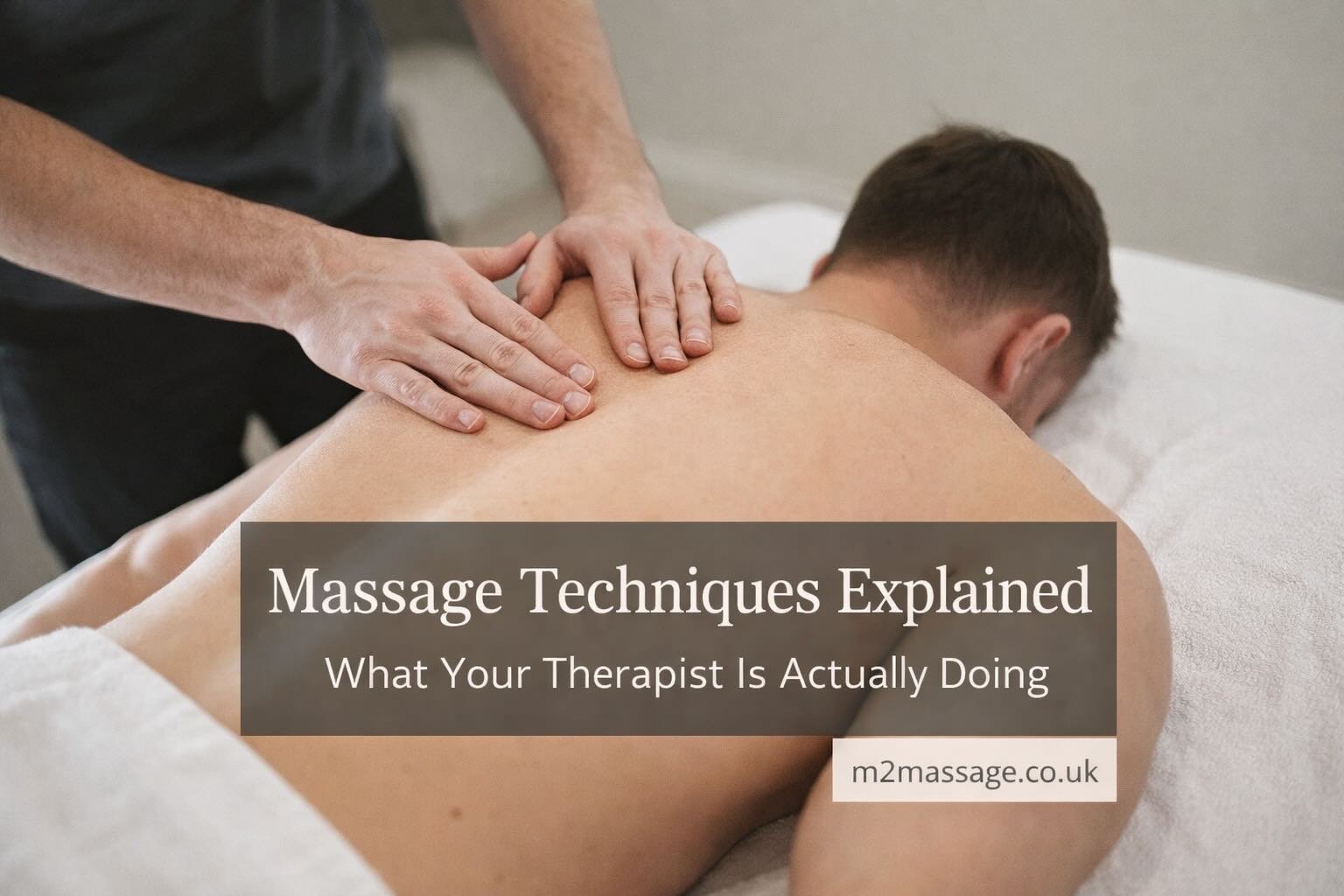
Effleurage is a technique made up of long, smooth, gliding strokes that follow the shape of the muscles. These movements are usually performed with the palms of the hands and can vary in pressure depending on the goal of the treatment.
In most sessions, effleurage is used at the beginning of a massage to help the body relax and transition into the treatment. It may also be used throughout the session to connect different techniques together or at the end to calm the muscles after deeper work has been completed.
Although it is often associated with relaxation, effleurage is also a functional technique that helps prepare the muscles for more focused work.
Why Therapists Use Effleurage
Effleurage serves several important purposes during a massage session. One of the main benefits is that it helps increase blood flow to the muscles. As the therapist applies smooth, continuous strokes, circulation improves in the treated area, which supports muscle function and recovery.
Another key purpose of effleurage is to help the muscles warm up gradually. Jumping straight into deep pressure can be uncomfortable and less effective. Effleurage allows the muscles to loosen and respond more naturally to deeper techniques such as petrissage or friction.
Effleurage is also used by therapists to assess the condition of the muscles. During these initial strokes, areas of tightness, tension, or sensitivity can be identified, allowing the treatment to be tailored to the individual.
What Effleurage Feels Like During a Massage
For most clients, effleurage is one of the most relaxing parts of a massage. The strokes are smooth, continuous, and controlled, helping to create a sense of calm and allowing the body to settle into the session.
The pressure can vary depending on your preference and the purpose of the treatment. In some cases, lighter strokes are used to promote relaxation, while in others, slightly firmer pressure may be applied to begin working into the muscle tissue.
A common observation during sessions is that clients begin to relax more deeply within the first few minutes of effleurage, as the body adjusts to the rhythm of the treatment.
When Effleurage Is Used During a Session
Effleurage is not limited to just the start of a massage. It is often used at multiple points throughout the treatment.
- At the beginning to warm up the muscles
- Between deeper techniques to maintain flow
- At the end of the session to relax the muscles
This makes it one of the most versatile techniques in massage therapy, helping to link different stages of the treatment together.
How Effleurage Supports Muscle Recovery
Effleurage can also play a role in supporting recovery from physical activity or muscle strain. By improving circulation, it helps bring oxygen and nutrients to the muscles while supporting the removal of waste products that build up during activity.
This is particularly useful for people who experience regular muscle tightness in areas such as the shoulders, back, or legs due to work, exercise, or daily habits.
In many cases, combining effleurage with deeper techniques can help improve overall mobility and reduce discomfort over time.
Professional Massage Therapy in Peterborough
At M2 Massage, treatments are carried out in a private studio environment in Peterborough, with a focus on professional massage therapy tailored to each individual client.
If you would like to learn more about treatments or book a session, you can contact M2 Massage here.
You can also send a direct WhatsApp message to enquire about availability or appointments.
If you have not yet read our previous article, you can learn more about the different techniques used during massage here: Massage Techniques Explained.
In upcoming articles, we will continue exploring other techniques such as petrissage and friction, helping you better understand how professional massage therapy works and how it can support relaxation and recovery.